The Jar Is Not Yet a Storage Plan
A jar storage plan can turn a clean, spare container into useful household storage by matching its opening, cleaning needs, and placement to a specific job.
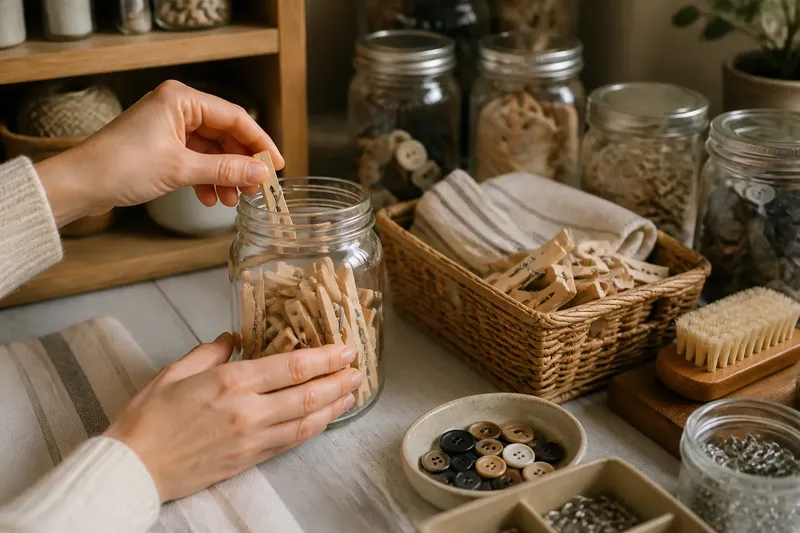
A jar storage plan starts with the jam jar in your hand and the item you hope to store beside it. Before putting the jar away, check whether the item can pass through its mouth, whether you can clean the jar comfortably, and whether the storage spot suits the way you will use it.
Those details matter more than the jar’s apparent capacity. Glass can be a handy material for visible, dry household supplies, but it is heavy, breakable, and sometimes awkward to reach into. Choosing a role that fits its shape is more useful than collecting jars because they might come in handy.
What household items suit a jar?
Jars work well for small, dry items that fit through the opening and do not need to be sorted into compartments. Wooden clothespins, spare buttons, and short craft supplies are possible candidates, depending on the jar’s shape and where you handle them.
Consider the full routine, not just storage. If you need to pour out the contents, a wide-mouth jar may be easier; if you need to pick out one small item, a shallow tin or tray may offer a clearer view and quicker access. A jar is one option among the containers already in your home, not the default choice for every loose object.
How do opening and shape affect access?
A jar’s mouth determines how easily items go in and come out. A narrow neck can catch clothespins or make it difficult to reach small parts, even when the glass body looks spacious. Check the opening against the contents and the way your fingers, a scoop, or a tool will enter.
Imagine you have a tall, narrow-mouth jar and a handful of wooden clothespins to keep near the laundry sink. You try dropping one in and lifting it back out; it catches at the neck. You then place the pins in the open basket already used for laundry supplies, where each is visible and easy to grasp. The result is a better fit for the task, while the jar can go to recycling rather than take up cupboard space.
Where should a storage jar sit?
Choose the location by the moment of use. A jar for spare buttons might belong beside a sewing kit, while one holding dry craft materials could sit near the work surface where those materials are used. A heavy glass jar is less comfortable on a high shelf or at the back of a crowded cupboard.
Try the empty jar in its intended place before filling it. Open and close it there, then lift it out and return it without shifting nearby items. If the spot makes the routine awkward, consider an open bowl, drawer, or lightweight box instead.
How much cleaning does reuse require?
Inspect the inside, rim, and lid for residue, odor, sticky areas, or ridges that could be difficult to clean. A smooth, wide opening is generally easier to reach than a narrow neck with shoulders that trap residue. Remove the label only if you are willing to do that work, and let the jar dry fully before storing its contents.
For food storage, check the jar and lid manufacturers’ instructions and choose a container suited to the food and storage conditions. A reused jar should not be assumed appropriate for every food use. If an odor or residue remains, or the lid is unpleasant to handle, recycling the jar is a reasonable alternative.
How should you decide if a jar fits its job?
- Contents: Put the intended item beside the jar and check whether its shape suits the opening. If it catches or cannot fit, choose a wider container or a tray.
- Retrieval: Reach in with the hand or tool you expect to use. If you cannot retrieve an item without tipping everything out, use a shallow bowl or divided box.
- Room to use: Leave space for fingers or a scoop above the contents. If the jar would need to be packed tightly, use a larger container or store fewer items elsewhere.
- Placement: Set the empty jar in the intended cupboard, drawer, or counter spot. If it blocks other items or is hard to lift, choose a lighter container or a more accessible location.
- Cleaning: Inspect the rim, interior, and lid for residue, odor, and hard-to-reach creases. If cleaning remains unpleasant, recycle the jar or choose an easier-to-wash option.
- Lid: Check that the lid fits and is in suitable condition for the intended task. If it is loose, cracked, or rusty, use the jar without relying on that lid for covered storage, or select another container.
- Alternative: Compare the jar with a bowl, tin, basket, or drawer already in use. If an existing option makes the contents easier to see or retrieve, use that instead of adding another container.
Which jar storage questions do people ask?
Should a jar always have a lid?
No. Leave the lid off when quick access matters and the contents do not need covering. If the job calls for covered storage, check that the matching lid fits and suits the intended use.
Can a reused jar hold food?
That depends on the food, jar, lid, and storage conditions. Follow the relevant manufacturer instructions rather than assuming a clean jar is suitable for every food.
Are jars good for small parts?
They can hold parts that fit through the opening and are easy to identify together. If the parts need sorting or frequent handling, a divided box or shallow tray may make them simpler to see and retrieve.
What if the jar may be useful later?
Consider the kind of item it could hold and whether you have a sensible place to keep it in the meantime. If no likely use comes to mind, recycling it leaves room for the containers currently serving a household task.
When is recycling a jar the better choice?
Recycling makes sense when the jar’s shape frustrates access, cleaning is difficult, the glass is unsuitable for its proposed place, or another container does the job more comfortably. Reuse is not simply keeping an object; it is finding a form that works with the routine around it.
A good jar storage plan accounts for the contents, the opening, the cleaning, and the place where the jar will be handled. When those pieces fit together, the jar can serve a clear purpose; when they do not, choosing another container is a useful decision in its own right.